

Secuwall
Offensive Infrastructure

Red Teaming

Full-scope adversary simulation against people, process, and technology

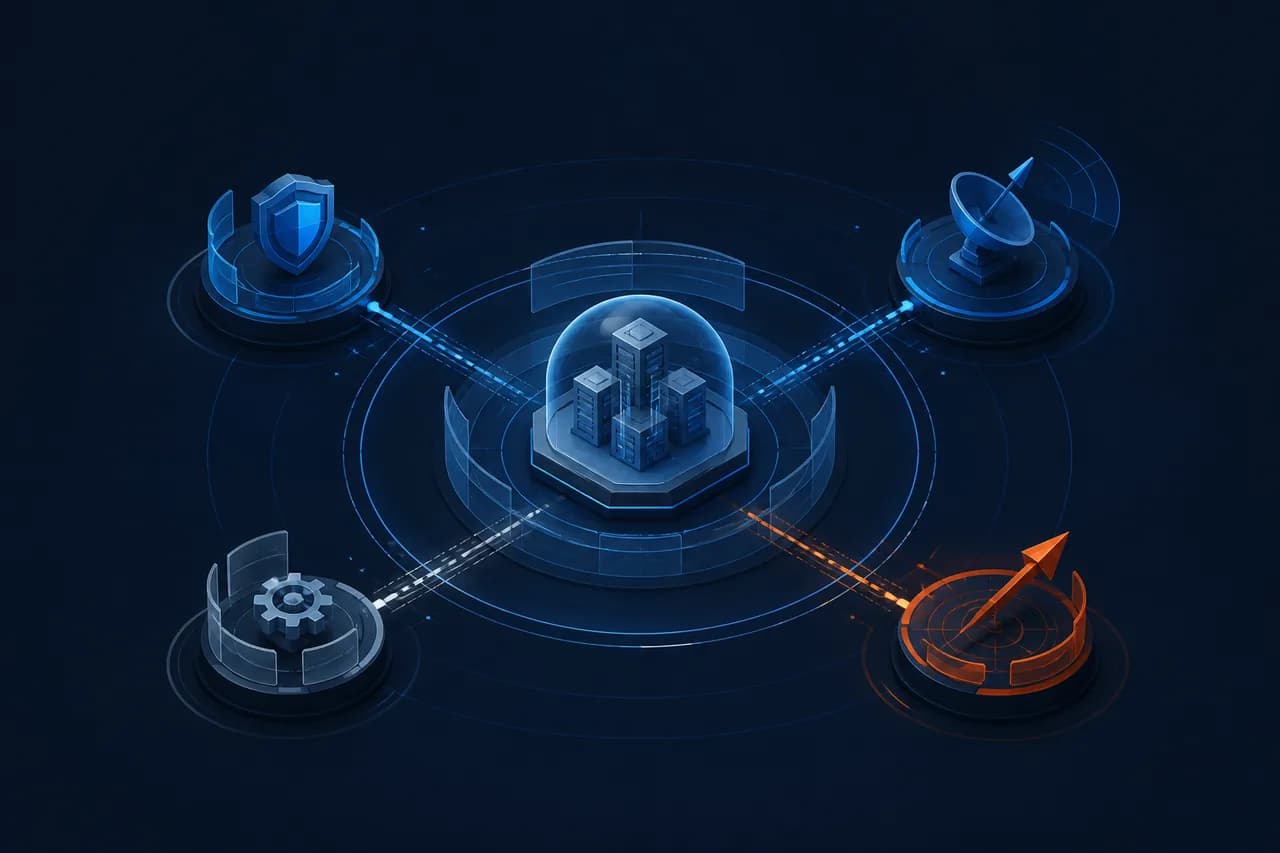
A controlled adversary path moving through an enterprise network toward a protected objective
Controlled security analysis

Red teaming asks a different question from a penetration test. Instead of enumerating flaws in one system, we emulate a specific adversary end to end and measure how far they get before someone notices. That means testing three things at once: the technology (can controls be bypassed?), the people (will someone click, or hand over a credential?), and the process (does anyone escalate, and how fast?). It complements penetration testing rather than replacing it — you need the component-level coverage too.

Scope

What we cover.

  • Technology — control bypass, exposed assets, detection and malware protection
  • People — social engineering scenarios and security awareness under pressure
  • Process — whether detection actually triggers escalation, response, and coordination
  • Agreed crown jewels as the objective, under strict rules of engagement
Methodology

How the engagement runs.

I

Introduction

A red team engagement is a realistic, comprehensive security audit of an organization, aimed at the three components that actually decide whether an intrusion succeeds: people, processes, and technology. We get there by simulating sophisticated attacks that replicate the tactics, techniques, and procedures real adversaries use.

Technologies

Security tooling tested through realistic attack simulation — exposed assets, intrusion detection, and malware protection under genuine pressure.

Personnel

Employee preparedness assessed through social engineering scenarios, security awareness, and how the team actually reacts when an alert fires.

Processes

Incident management protocols tested end to end — detection, response, and coordination while an incident is live.

Red team vs. penetration test

Both are security testing, but they answer different questions and are run differently.

Red teaming

A wider, immersive strategy simulating realistic sophisticated attacks against your entire defensive posture. It tests your overall capability to detect, prevent, and respond.

Penetration testing

Identifies specific system vulnerabilities within a defined scope, evaluates their impact, and recommends corrections. Best suited to new applications before deployment.

These are complementary, not opposing. Penetration testing assesses the security of specific components; red teaming evaluates the effectiveness and resilience of the whole security programme.

II

The teams

Control team

The primary liaison between you and us. Supplies information to threat intelligence and coordinates with the red team, without disclosing anything to the blue team.

Blue team

Your internal security team, detecting and responding to the simulated attacks. Usually kept uninformed about the scenarios — that is the point.

Threat intelligence team

Handles preparation: gathers and analyses threat information, then develops attack scenarios customised to your sector and threat profile.

Red team

Executes the simulated attacks along the scenarios threat intelligence defined, testing the security posture as a whole.

III

Red team stages

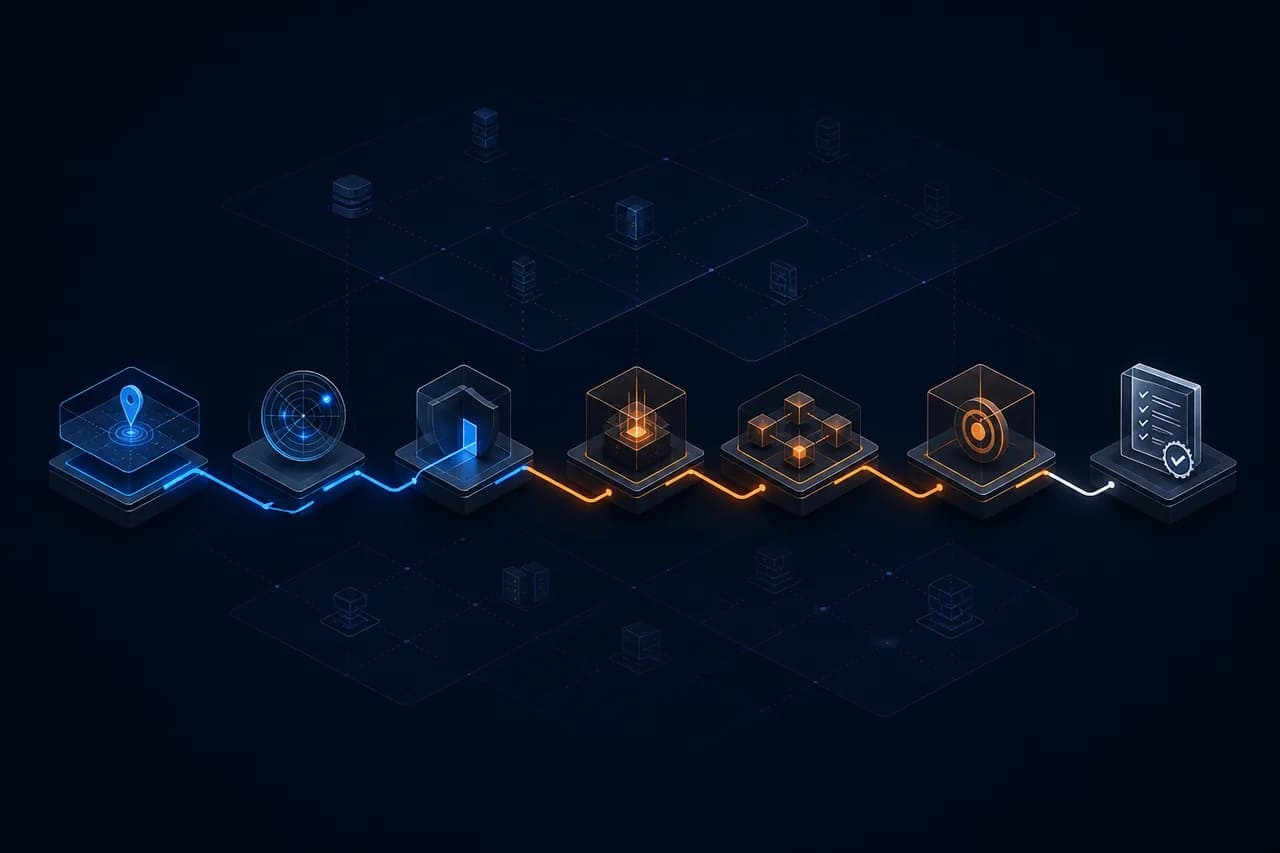
The stages of an engagement align to established frameworks such as the Cyber Kill Chain and MITRE ATT&CK.

3.1

Planning and objectives (the rules of engagement)

Before any technical work begins, the rules are set so the exercise is both safe and worth running.

  • Goal definition — agreeing the crown jewels. What is the red team actually trying to reach? Access to an executive mailbox, exfiltration of customer PII, or domain admin rights.
  • Rules of engagement — a legal document defining scope, permitted testing hours, prohibited targets (life-safety systems, for instance), and emergency contacts.
  • Threat intelligence — deciding which adversary to emulate, so the techniques used are realistic for who would actually come after you.
3.2

Reconnaissance

Gather as much as possible about the target without raising an alarm.

  • Passive reconnaissance (OSINT) — collecting from public sources.
    • Staff names and roles from professional networks
    • DNS records and subdomain analysis
    • Searching for leaked credentials in breach data
  • Active reconnaissance — carefully probing the network perimeter.
    • Port scanning, slow and low, to stay under firewall thresholds
    • Enumerating cloud storage buckets for misconfiguration
3.3

Initial access

Gaining a foothold. This is rarely a smash and grab — it is usually subtle.

  • Social engineering — spear-phishing, voice phishing, or physically tailgating into a building.
  • Exploitation — targeting unpatched vulnerabilities in public-facing applications such as VPNs and web servers.
  • Payload delivery — executing code on a victim machine to establish a connection back to our infrastructure.
3.4

Command, control, and persistence

Once inside, the goal is to stay inside.

  • Command and control — establishing a covert channel between the compromised machine and our external server, shaped to mimic legitimate traffic such as HTTPS or DNS so it blends in.
  • Persistence — modifying the system through scheduled tasks or registry keys so a reboot doesn't cost us access.
3.5

Lateral movement and escalation

The entry point is rarely the destination. The team has to move through the network.

  • Privilege escalation — going from a standard user account to administrator or root using local exploits.
  • Internal reconnaissance — mapping the internal network, finding file shares, and locating where the crown jewels actually live.
  • Pivoting — using the compromised machine as a jump box into restricted subnets that aren't reachable from the internet.
3.6

Action on objectives

  • Data exfiltration — extracting the targeted data, often slowly or encrypted, to avoid triggering data-loss prevention.
  • Impact demonstration — placing a proof-of-access file on a sensitive server to prove we got there, without harming the system.
3.7

Reporting and remediation

  • Executive summary — a high-level view of the risk and business impact, written for leadership.
  • Technical report — a timeline of the attack, evidence of access, and precisely how each control was bypassed.
  • Purple team debrief — a collaborative workshop where we walk your defenders through what we did, timestamp by timestamp, so they can check their own logs and tune alerting.
Deliverables

What you get at the end.

Executive summary framed around business impact
Technical report with the full attack timeline and evidence
Documented control bypasses, each with the detection that should have fired
Purple team debrief so defenders can tune alerts against real activity

Who it's for

Organizations with an established security function that want to know whether it works under realistic pressure.

Need a scope for this engagement?

Tell us what's in your environment and we'll come back with a scoped plan.

Talk to us